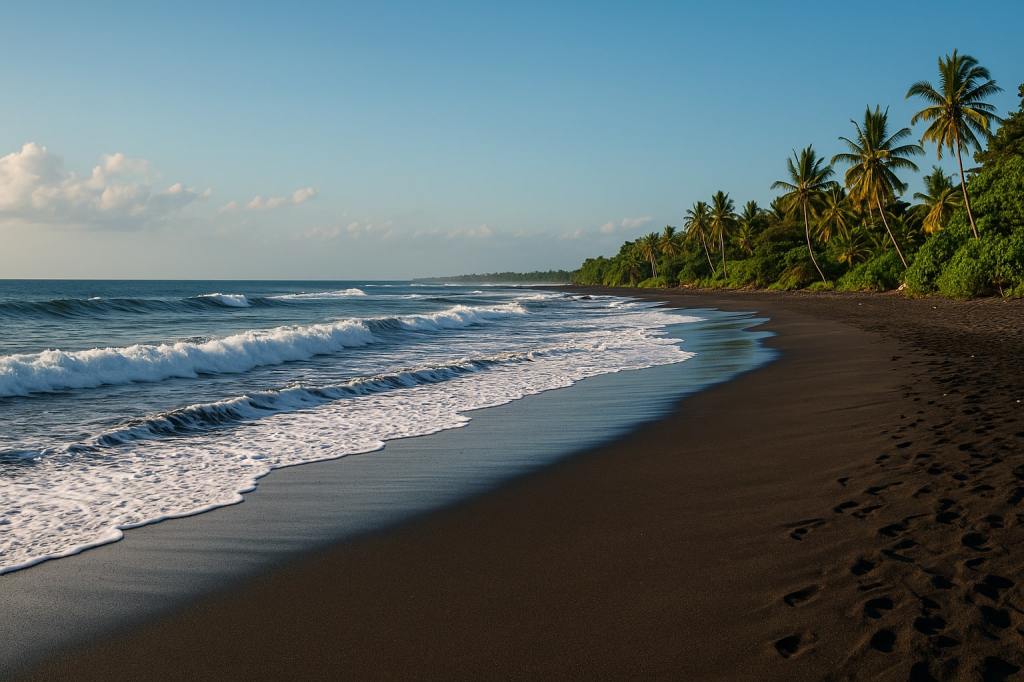
So, let’s get this straight right from the start — if you’ve heard the words black sand beaches in Bali and thought, “Huh? Isn’t Bali just white sand and turquoise waters?” — you’re not alone. A lot of people picture Bali like something out of a tropical screensaver, and yeah, we’ve got those white sand stunners too. But let me tell you, the black sand beaches here? Totally different vibe. Less polished, more raw, more real. And that’s honestly what makes them stand out.
Read also: How to Plan a Honeymoon in Bali on a Budget
I’ve been living and working in Bali for over a decade as a tour driver, and let me tell you, I’ve driven across more coastlines than I can count — some full of crowds and cocktails, others quiet with crashing waves and no one around but a local fisherman and a lazy dog. The black sand beaches? They’re where nature shows off a little. And if you’re the kind of person who loves getting off the beaten path — or you’re just curious why the sand is black to begin with — then yeah, you’re gonna want to keep reading.
What Actually Makes Bali’s Black Sand Beaches, Well… Black?
Alright, so here’s a quick science-y moment (I’ll keep it chill, promise). The black sand on these beaches comes from Bali’s volcanic activity. Yep, that’s right. Mount Agung, Mount Batur, and their other fiery cousins have been shaping this island for centuries. When lava flows hit the ocean and cool down rapidly, they break into tiny fragments that eventually become black sand. That’s what you’re walking on — literal pieces of ancient volcano.
So, when you’re standing barefoot on a beach like Pantai Keramas or Yeh Gangga, you’re not just beach-bumming. You’re literally standing on Bali’s geological history. Kind of wild when you think about it, right?
And fun fact — black sand absorbs heat like crazy. So yeah, it gets HOT. Don’t even try to walk barefoot at noon unless you’re into the whole hot-coal challenge. Bring sandals. You’ll thank me later.
Where to Find the Best Black Sand Beaches in Bali
Let’s break this down by region because Bali’s not just Seminyak and Ubud (though yeah, I love those places too). The black sand beaches are mostly on the east, north, and some parts of the west coast. Here’s where to go if you’re chasing that dark, gritty magic.
East Bali – Secret Vibes and Surfer Dreams
Keramas Beach
This is probably one of the more “known” black sand beaches in Bali, especially among surfers. Keramas Beach is in Gianyar, not too far from Ubud or Sanur — so it’s perfect if you’re not in the mood to drive for hours.
The beach itself? It’s got a cool edge. The waves are big, the crowd is chill, and if you’re lucky, you’ll catch a surf comp going down at Komune Resort. Yeah, you’ll find a few Instagrammers around, but it’s still way more low-key than Canggu.
If you’re not surfing, it’s still great for a sunset walk or just zoning out with the sound of the waves. And since it’s not overrun with warungs and beach clubs, bring your own snacks and water.
Pantai Masceti
Just a bit down from Keramas is Masceti. I love this beach because it’s got this sacred, almost eerie vibe. There’s a temple nearby (Pura Masceti) that locals go to for ceremonies. It’s not really a sunbathing kind of place — more of a come-sit-and-watch-the-sea kind of spot.
Sometimes I bring guests here in the early morning, especially if they’re into photography. The contrast of the black sand with the light at sunrise? Unreal.
North Bali – Chill Out Zone with Underrated Beaches
Lovina’s East Side
Okay, so Lovina is mostly known for dolphins, right? And yeah, the whole “sunrise boat tour with jumping dolphins” thing is cute and all. But drive just 15-20 minutes east, and you’ll start seeing more black sand and fewer tourists.
Some of the beaches along this stretch don’t even have names on Google Maps. That’s how off-grid they are. You’ll see local kids playing soccer, fishermen mending their nets, and barely another foreigner in sight.
The vibe here is peaceful — like Bali from 20 years ago. And the sand? Soft, dark, and dotted with little bits of coral and lava rock.
Pemuteran
Pemuteran is technically on the northwest side, but it blends the chill of the north with the snorkeling paradise of Menjangan. The sand here is black but leans more towards a grey-ish tone, especially when the sun hits it. It’s not the kind of beach you lay on for tanning (unless you don’t mind a little volcanic exfoliation), but it’s perfect for a snorkel trip or just breathing in that clean, salty air.
West Bali – Wild, Windswept, and Worth It
Yeh Gangga
This is a personal favorite. Yeh Gangga sits just north of Tanah Lot, but most tourists completely miss it. The beach stretches wide, with dramatic waves and dark, shimmering sand that almost looks silver in some spots. You’ll see lots of locals on dirt bikes or kids flying kites. Not a bean bag or overpriced cocktail in sight.
If you’re into drone photography or just want to see a different side of Bali, come here. It’s raw, rugged, and ridiculously photogenic.
Also, there’s a local warung called Warung Agung right on the cliff. Cold coconut, fresh grilled fish, and that million-dollar view? Yes please.
What to Do (and Not Do) at Black Sand Beaches in Bali
Alright, quick honesty session. These beaches aren’t for everyone. If your dream beach day involves fruity drinks and turquoise water, you might get a little surprised.
But if you’re open to something more natural and less manicured — more “real Bali,” honestly — then you’re gonna love ‘em. Here’s what to know:
Bring Footwear
Can’t say this enough. That black sand gets HOT. Like, you-can-fry-an-egg-on-it hot. I’ve seen people sprinting to the shade like it’s a beach Olympics. Slides or sandals are a must.
Watch the Waves
A lot of these beaches, especially on the east and west coasts, have strong currents. Great for pro surfers, not great for casual swimming. I’m not trying to scare you, just keeping it real. If you’re not sure, ask a local or just stick to the shallows.
Don’t Expect Resorts Everywhere
Unlike Seminyak or Jimbaran, black sand beach areas usually don’t have tons of five-star hotels or beach bars. Some spots, like Keramas or Amed, are more developed, but most are still super local. That’s the charm. Just plan ahead if you’re looking for meals or bathrooms.
Respect the Space
Some of these beaches are near temples or considered spiritually important by locals. Don’t do anything sketchy like flying drones over ceremonies or leaving trash behind. Balinese people are super welcoming, but respect goes a long way.
Why Black Sand Beaches Are Underrated (But Probably Won’t Be for Long)
You know how places like Uluwatu and Canggu went from quiet surf towns to Instagram central in like, five years? Yeah, I’ve got a feeling some of these black sand spots might be next. Especially now that more eco-travelers and digital nomads are hunting for something fresh.
Places like Saba Beach are starting to get attention, especially with horse riding tours popping up along the shoreline. And in Keramas, there’s already a mix of wellness retreats and beach clubs blending into the surf scene.
That’s why I always tell my guests — go now while it’s still quiet. The black sand beaches give you a different side of Bali. A little less filtered, a little more soul.
And you’d be surprised how many locals prefer them too. My cousin Nyoman, who’s lived in Bali all his life, told me he always goes to Pantai Soka on his days off. Says the waves clear his head better than any spa ever could. And he’s right. There’s something therapeutic about standing on dark volcanic sand while the ocean crashes like it’s got something to say.
Can You Swim at Black Sand Beaches? Let’s Be Real About It
Okay, this one comes up all the time with guests. “Can we swim here?” And I always answer with a very unhelpful: “Depends.”
Here’s the deal — not all black sand beaches in Bali are swimmable. Some, like Lovina or parts of Amed, have gentler waters and are good for a dip. But many of the east and west coast spots have powerful waves and strong undertows.
I’ve seen plenty of people underestimate that ocean. It’s not about scaring you — it’s about respecting the sea. If there are no lifeguards or no one else swimming, probably best to stay on the shore. Or, better yet, enjoy the beach in other ways — walking, meditating, photography, whatever feels right.
But hey, if you are keen on getting in the water, just ask a local nearby. Seriously, they’ll give it to you straight. Balinese people are super chill, but they’ll also tell you if a spot’s dangerous.
What to Bring for a Black Sand Beach Day in Bali
Here’s what I usually pack when I head out with my guests or just on a solo coast run:
- Flip flops or sandals (already said this, I know, but it’s worth repeating).
- A sarong or towel — the sand sticks differently than on white sand beaches.
- A hat and plenty of sunscreen. The sun reflects off the black surface way more.
- Water and snacks — especially if you’re going to a more remote spot.
- Camera or phone (with space on it!) because these beaches look otherworldly at sunrise or sunset.
- A bag to carry your trash — a lot of these beaches don’t have bins.
Closing Ramble — Why Black Sand Beaches in Bali Kinda Stick With You
You know that feeling when you discover a place before it becomes a trend? That’s what these beaches are like. They might not have the “wish you were here” postcard vibe at first glance, but trust me, they grow on you.
There’s this quiet kind of beauty about them. The way the dark sand contrasts with the bright sky. The sound of waves without club music in the background. The stillness. The realness.
If you’ve got a day or two to spare on your trip, pick one or two of these black sand beaches in Bali to explore. Get a little sand in your shoes, take a break from the tourist trails, and see the island from a different angle. I’m willing to bet you’ll remember it long after the tan fades.
And who knows, maybe I’ll see you out there — parked on the edge of the beach, sipping a cold coconut, watching the tide roll in over ancient lava.
 Bali Vacation
Leave a comment